
Hosting providers see abuse every day. Phishing kits, malware loaders, botnet controllers, and DDoS launch points often live on shared infrastructure for hours or days before anyone acts. During that time, damage spreads well beyond a single victim.
Most attacks do not magically disappear when a domain is taken down or an IP is blocked. They persist because the originating network never gets clear, actionable feedback. When hosting providers report verified attacks back to the source network, they help close that gap and shorten the time between detection and takedown. That feedback loop is one of the fastest ways to reduce abuse at internet scale .
Below are ten reasons this practice matters more than ever.
What “reporting attacks back to the originating network” actually means
At a basic level, it means sharing high-confidence abuse data with the network where the attack started, not just blocking it locally.
In practice, that usually includes:
- Sending standardized abuse reports with IPs, timestamps, and evidence
- Notifying the ISP, cloud provider, or hosting network responsible for the source
- Enabling that network to investigate and shut down the abusive system
This is not about blame. It is about remediation.
1. It stops repeat abuse faster
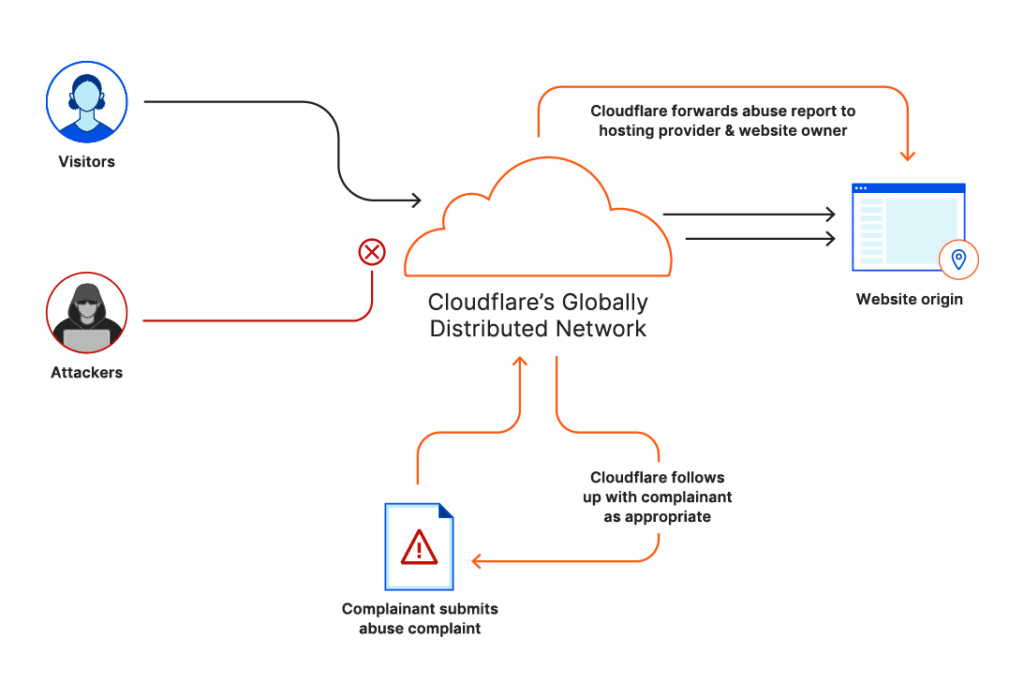
Blocking an IP or domain only protects your own environment. Reporting the attack helps the source network disable the compromised system, which prevents the same attacker from resurfacing elsewhere minutes later.
Faster takedowns reduce total attack volume across the internet, not just on your platform.
2. Most attacks originate upstream anyway
More than 98 percent of large-scale spam, phishing, and scam activity originates from ISP, cloud, or hosting subscriber networks . If those networks never hear about the abuse, the root problem remains untouched.
Reporting upstream addresses the problem where it actually lives.
3. It improves global network reputation
When abuse goes unresolved, entire IP ranges and ASNs develop a bad reputation. That hurts deliverability, trust, and peering relationships for everyone involved.
Consistent reporting gives origin networks the data they need to clean up infected hosts and protect their reputation long term.
4. It reduces collateral damage from blunt blocking
When attacks persist, defenders resort to wide blocks. That often takes down legitimate customers along with the bad actors.
Targeted reporting enables precise remediation, so fewer innocent users get caught in the blast radius.
5. It supports compliance and regulatory expectations
Regulators increasingly expect infrastructure providers to act on known abuse, especially around scams, fraud, and consumer harm.
Clear reporting and documented response workflows help demonstrate due diligence and responsible network operation.
6. It lowers operational costs over time
Unresolved abuse creates more tickets, more alerts, and more manual work for security and abuse teams.
When attacks are stopped at the source, downstream filtering and incident handling costs drop. Fewer repeat incidents means less analyst fatigue and better use of limited staff.
7. It strengthens trust between networks
The internet works because networks cooperate. Reporting abuse in a structured, respectful way builds trust between hosting providers, ISPs, and cloud platforms.
That trust pays off during major incidents, when fast coordination matters most.
8. It creates better threat intelligence for everyone
Shared abuse data feeds broader visibility into active campaigns, infrastructure patterns, and emerging tactics.
When one provider reports abuse, many others benefit from earlier detection and better context.
9. It shortens the window of harm for victims
Every hour an attack remains active increases financial loss, brand damage, and user risk for victims.
Reporting back to the origin network helps shut down infrastructure before campaigns fully scale.
10. It helps clean up the internet at scale
Local defenses will always matter, but they are not enough on their own. Systemic abuse requires systemic response.
Closing the loop between victims and source networks is one of the few proven ways to reduce internet abuse at scale .
How hosting providers can report attacks effectively
To make reporting useful, a few basics matter:
- Use standardized formats so reports are machine-readable and actionable.
- Include evidence like logs, timestamps, and indicators.
- Automate where possible to avoid manual backlog.
- Send reports quickly, while the abuse is still active.
- Track outcomes to measure response time and effectiveness.
Without these steps, reports often get ignored or delayed.
Tools that make reporting easier
Modern abuse management platforms help hosting providers turn raw detections into clean, actionable reports.
For example, Abusix Guardian Ops automates abuse intake, correlation, and notification workflows, making it easier to notify originating networks in near real time. This reduces manual effort while improving response speed and consistency .
Common mistakes to avoid
- Sending vague or incomplete reports
- Reporting without validation, which creates noise
- Relying only on email inboxes instead of automated workflows
- Treating reporting as optional rather than operationally critical
Each of these slows down remediation and frustrates other networks.
Closing the loop is the real defense
Hosting providers are uniquely positioned to influence abuse outcomes. Reporting attacks back to the originating network is not extra work for the sake of cooperation. It is one of the most practical ways to reduce repeat abuse, protect customers, and keep the internet usable.
If you want to see how automated reporting and takedown workflows fit into your environment, visit https://www.abusix.com/contact-us and start the conversation.
FAQ
Why should hosting providers report attacks instead of just blocking them?
Blocking only protects your own network. Reporting helps the source network shut down the attack infrastructure, which prevents repeat abuse elsewhere.
What information should be included in an abuse report?
At minimum: source IPs, timestamps, attack type, and supporting evidence like logs or packet samples.
Does reporting abuse create legal risk?
When done with verified data and clear documentation, reporting usually supports compliance and shows responsible network operation rather than increasing risk.
How fast should attacks be reported?
As quickly as possible. The value of reporting drops sharply once an attacker has moved on or rotated infrastructure.
Can reporting really reduce global attack volume?
Yes. Coordinated reporting and remediation shorten campaign lifetimes and raise the cost of abuse for attackers, which reduces overall volume over time.


