

Blocklists remain one of the most effective controls in email security. They stop bad traffic early, reduce system load, and protect reputation before content scanning ever starts.
The problem is not the idea of blocklists. The problem is that many were designed for an earlier version of the internet.
As mail volumes, abuse patterns, and infrastructure complexity have grown, mail platforms need more than static or narrowly focused reputation data. That is where Abusix’s Guardian Mail takes a different approach compared to long-established providers like Spamhaus.
This is not about declaring a winner. It is about understanding why many operators now expect more from a commercial blocklist.
What Guardian Mail is designed to do differently
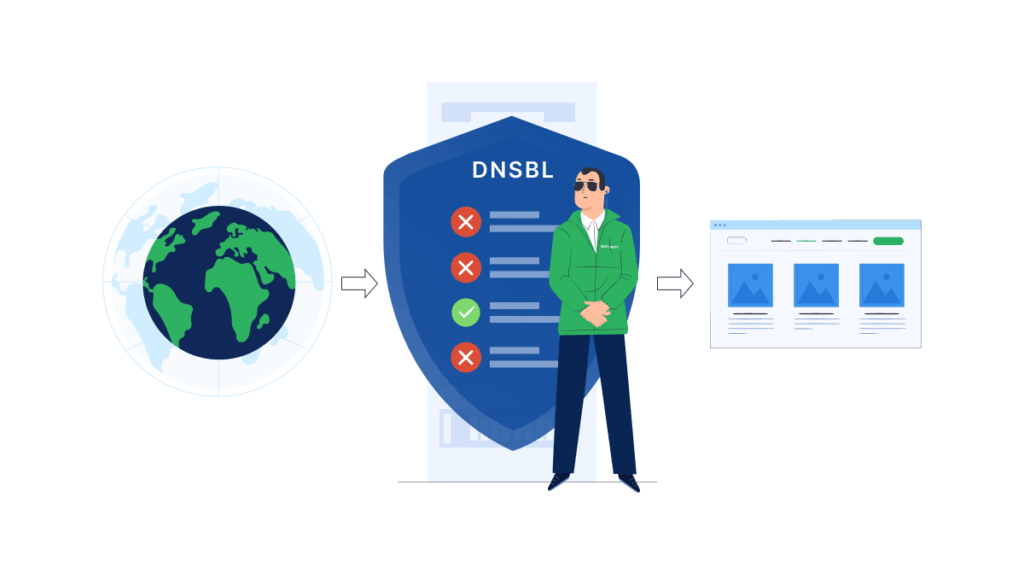
Guardian Mail is built as a broad spectrum, commercial blocklist service focused on stopping abuse at the SMTP connection layer using real-time, infrastructure-driven intelligence.
Instead of relying primarily on historical listings or single-purpose datasets, Guardian Mail combines:
- Real-time SMTP telemetry
- Global spam traps and honeypots
- Network reputation and behavior analysis
- Policy-based scanning and validation
The result is earlier blocking, better context, and less operational friction.
Where Guardian Mail stands apart
Broader coverage at the connection layer
Many traditional blocklists are highly effective against known spam sources, but they often specialize in specific abuse categories.
Guardian Mail is intentionally broad. It blocks:
By focusing on infrastructure behavior, Guardian Mail catches abuse that has not yet been classified into a single category.
Real-time intelligence instead of delayed reaction
Speed matters. Abuse infrastructure can appear and disappear in hours.
Guardian Mail continuously ingests live telemetry, which means:
- Faster detection of newly active abuse
- Quicker listing and delisting cycles
- Less exposure to fast-moving campaigns
This real-time model reduces the gap between first abuse signal and enforcement.
Lower false positives through correlation
False positives are one of the biggest pain points for mail operators.
Guardian Mail reduces this risk by correlating multiple signals before taking action. Listings are not based on a single hit or report, but on patterns observed across sources.
That correlation helps protect legitimate senders while still blocking aggressively where it counts.
Designed for inbound and outbound protection
Inbound filtering gets most of the attention, but outbound abuse is often where reputation damage starts.
Guardian Mail includes signals that help identify:
- Compromised accounts
- Infected hosts
- Misconfigured mail systems
Stopping outbound abuse early protects IP reputation and prevents escalation.
Commercial support and service expectations
Legacy blocklists are trusted across the industry, but they were not all designed with modern operational support in mind.
Guardian Mail is built as a service, not just a dataset. That includes:
- Clear delisting workflows
- Responsive commercial support
- Transparent lookup and feedback mechanisms
For teams running large mail platforms, that operational backing matters.
Drop-in replacement without stack disruption
Guardian Mail is designed to integrate easily as a DNSBL or RSYNC feed.
Mail operators do not need to rip and replace their stack. Guardian Mail fits into existing workflows while improving results at the first decision point.
Built for today’s abuse volumes
Email abuse is no longer measured in thousands of messages. It is measured in millions.
Guardian Mail is engineered for:
- High-volume environments
- Automation-first operations
- Low-latency decision making
That scale is critical for ISPs, hosting providers, and global mail platforms.
Where legacy blocklists still play a role
Established providers like Spamhaus continue to be valuable parts of many security stacks. They bring years of experience and trusted data.
The shift happening today is not about replacement for its own sake. It is about layering.
Many modern mail platforms now use:
- Guardian Mail as a broad spectrum, real-time front line
- Specialized or legacy blocklists as enrichment layers
- Content and policy filtering downstream
This layered approach reflects how abuse actually behaves today.
Operational impact matters as much as detection
Mail operators care about more than block rates.
They care about:
- Fewer support tickets
- Faster issue resolution
- Lower infrastructure cost
- Better sender reputation
By stopping abuse earlier and reducing noise, Guardian Mail helps teams spend less time cleaning up and more time improving service quality.
The real difference is philosophy
At its core, the difference comes down to mindset.
Guardian Mail is built around the idea that:
- Abuse is an infrastructure problem
- Reputation is dynamic, not static
- Blocking early is cheaper and safer
- Operators need service, not just lists
That philosophy aligns with how the internet works today.
Choosing what fits your mail platform
Every mail environment is different. Some rely heavily on legacy datasets. Others are rethinking their first line of defense.
For teams dealing with modern abuse volume, fast-moving campaigns, and reputation-sensitive infrastructure, Guardian Mail offers a broader, more responsive approach to connection-level protection.
If you want to see how Guardian Mail compares in your specific environment, visit https://www.abusix.com/contact-us and start the conversation.
FAQ
Does Guardian Mail block more aggressively?
It blocks earlier and more intelligently by correlating real-time signals, which often reduces the need for downstream filtering.
Is Guardian Mail suitable for high-volume mail platforms?
Yes. It is designed for ISPs, hosting providers, and large mail operators handling significant traffic.
How does Guardian Mail handle false positives?
Through multi-signal validation, transparent lookups, and fast delisting workflows.
Where does Guardian Mail sit in the mail flow?
At the SMTP connection layer, before content scanning and policy enforcement begin.


