Every holiday season, scammers borrow the urgency of Black Friday to push fake deals into inboxes, and 2026 is no exception. Here’s what our samples show, where the infrastructure sits, and how you can check whether your own network is carrying some of this traffic.
When the spam wave started
Our threat analysts detected that Black Friday shopping spam and scam mail first appeared at the end of September, and volumes rose noticeably from the second week of October. We expect activity may peak in the final days before Black Friday and on the day itself, although that pattern is still taking shape, so this week is a good moment to review your outbound traffic.

Black Friday shopping spam and scam mail trend detection 2026
The lure and brand favorites of scammers
Mail promoting fake shopping sites has grown steadily since mid-September and follows a recognizable template: a bracketed tag such as [Black Friday 2026] or [Limited Time Offer], followed by luxury goods at a fixed “starting at” price. Typical subjects include “[Black Friday] Louis Vuitton Handbags Starting at $169” and “[Limited Time Offer] Luxury Watches From $250”. Because the same prices and phrasing recur across many messages, these campaigns are easier to recognize.
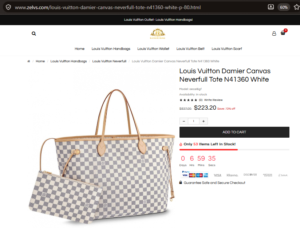
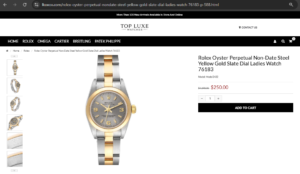
Real examples of fake shopping sites used in spam and scam campaigns during Black Friday 2026
Amazon is the brand that appears most often as a victim of deal spam, with subjects such as “10 Insane Early Black Friday Deals on Amazon”. Delivery notices and order or billing error lures haven’t spiked (yet) this season, because they already remain consistently high all year round.
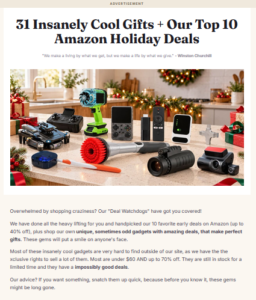
Real example of deal spam abusing the brand of Amazon
Where the infrastructure sits
Not every domain behind these campaigns is newly registered, and we haven’t seen compromised sites in the mix. Many domains appear cloaked: visitors who arrive through a VPN or proxy are redirected to example.com, yahoo.com, or google.com, so scanners see a harmless page while recipients see the scam.
The sending IPs we see cluster on a handful of networks, most of them OVH SAS, followed by Internet Khong Trung Company, Netiface America, Cloud Web Manage, and Secure Internet Limited. The registrars we see most often are RU-CENTER-RU, July Name Limited, Alibaba Cloud Computing Ltd., NameSilo and Namecheap.
Appearing on this list reflects how easily scammers rent infrastructure, without a provider’s knowledge or intent, and how geographically widespread this network abuse challenge is.
How to check whether your network is hosting spam and scams
- Look up your IP ranges, domains, and customer URLs in the free Abusix IP, Domain and URL Reputation Lookup to see whether they’re listed.
- Review outbound mail from recently provisioned servers for bursts of bracketed “Black Friday” or “Limited Time Offer” subjects.
- Test customer-hosted shop domains from more than one network location, since redirects to google.com, yahoo.com, or example.com often signal cloaking.
- Act promptly on network abuse reports through the holidays, as one newly rented server can send large volumes quickly.
- Use the Abusix Feedback Loop service to share spam reports through a free Data Channel, so complaints reach the senders and network operators who can act on them.
If you’d like help making sense of what you find, our team is happy to talk it through.